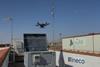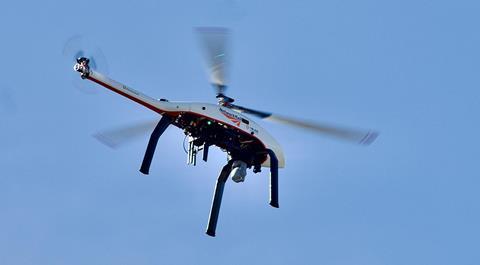
UK: Network Rail is trialling the use of unmanned aerial vehicles flying beyond visual line of sight to enable the faster inspection of railway routes.
The infrastructure manager envisages that BVLOS drones could fill a gap between its existing line of site drones and its crewed helicopter. Maintenance staff could be directed to potential faults more quickly, and there could be a faster response to trespass incidents.
Two trials are underway to establish safe operating protocols and achieve Civil Aviation Authority approval for BVLOS flights.
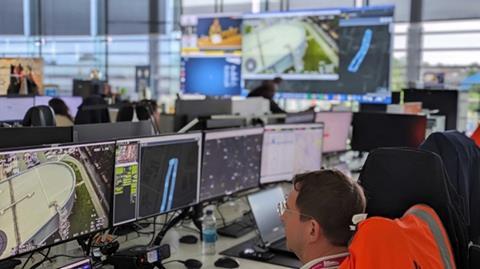
Flight management software company Dronecloud, drone operator RUAS and drone manufacturers Velos Rotors and Evolve Dynamics have set up a drone operations centre and drone pad at Network Rail’s Birmingham Rail Operating Centre for incident response and general infrastructure monitoring.
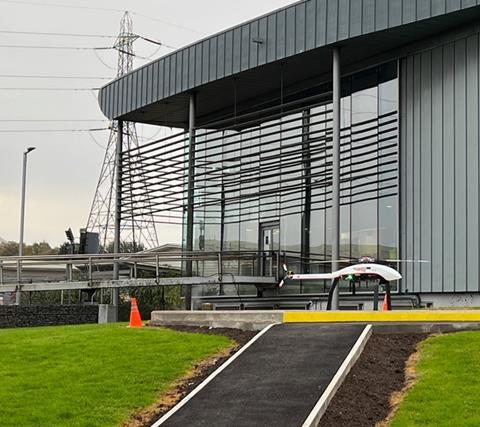
The CAA has approved use within a 10 km range. The drone operator remains at the control point, although the drone currently has to be visually monitored by observers.
CAA approval for fully BVLOR flying is planned for later.
Dronecloud CEO Jan Domaradzki said the company’s vision is to deploy a managed service with multiple hubs and satellite drone ports which would ‘be a truly game-changing capability, opening the door for centralised mass-scale deployment of drones across all critical national infrastructure’.
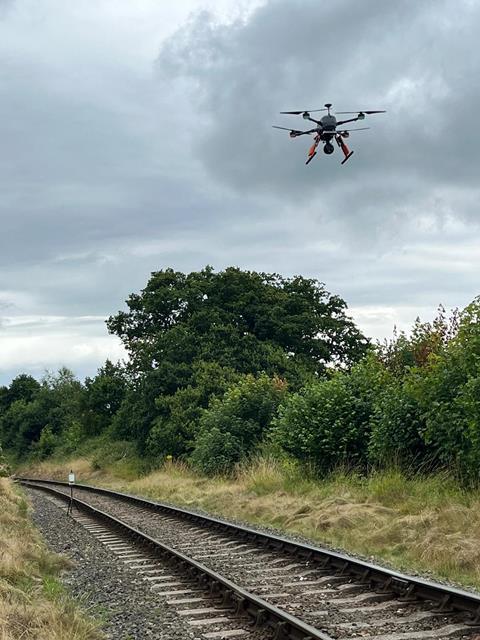
Meanwhile, Drone Major and Network Rail are trialling Digital Tethering in Wolverhampton and on the heritage Severn Valley Railway. This is designed to enable BVLOS operations in areas with poor GPS/GNSS coverage.
‘Information provided by drones will mean our colleagues’ expertise in maintaining the railway can be focussed where it is needed, without exposing them to the risk of the ‘live railway’, and instances of trespass can be tackled much more quickly’, said Dominic Mottram, Network Rail’s Programme Manager for National Drone Strategy.